Immigration policy in the United States has always been a mirror reflecting broader debates about who belongs, who contributes, and who is deemed a burden. Few concepts embody this tension more than the “public charge” rule, a provision that has existed in federal law since 1882.
For over a century, courts and agencies have interpreted “public charge” narrowly, focusing on individuals who are primarily dependent on the government for subsistence. Yet in November 2025, the Department of Homeland Security (DHS) and U.S. Citizenship and Immigration Services (USCIS) announced a sweeping proposal that could upend this longstanding understanding (NILC Public Charge Proposed Policy).
On November 19, 2025, DHS formally published a Notice of Proposed Rulemaking (NPRM) to rescind the 2022 Biden Administration Public Charge Rule. That 2022 regulation had codified the 1999 guidance, clarifying that only cash assistance for income maintenance and long term institutionalization at government expense counted toward a public charge determination.
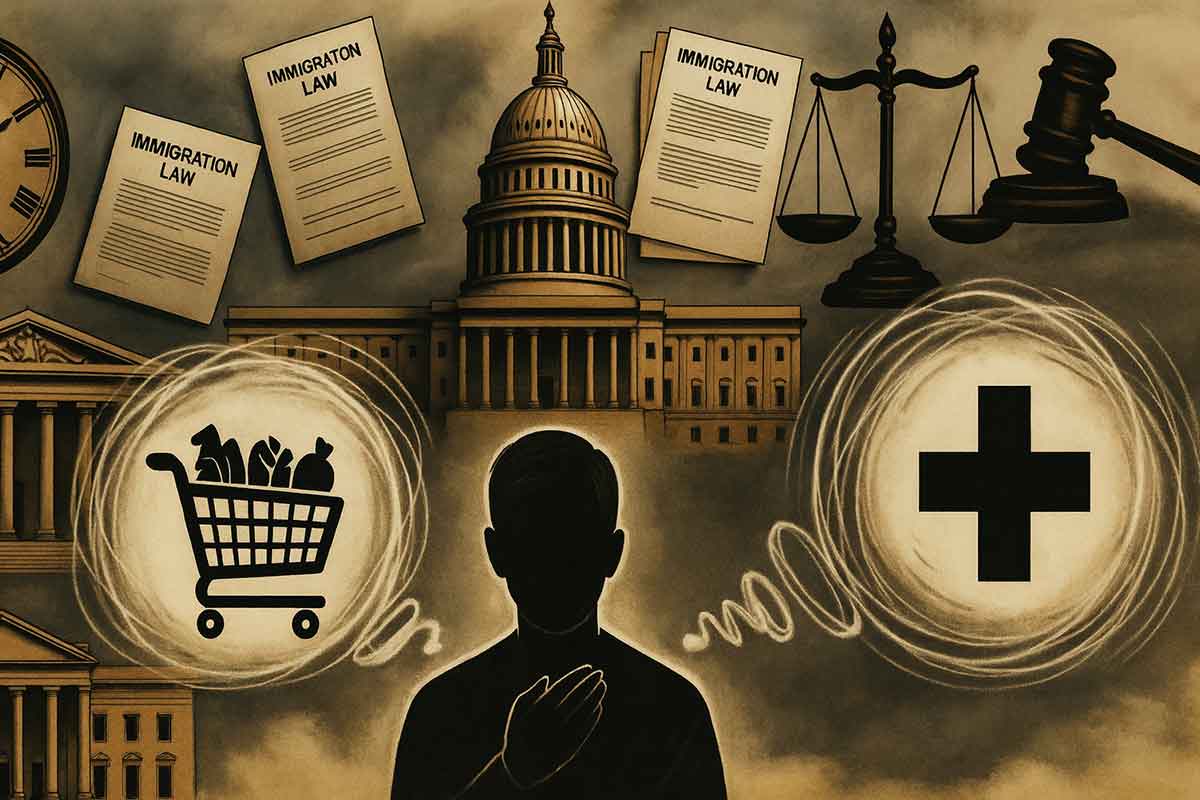
The new proposal, however, signals a dramatic departure. It would expand the definition of public charge to include nearly any benefit use, including “means tested public benefits” such as food assistance, housing subsidies, and Medicaid.
This change is not merely technical. It represents a fundamental shift in how the government may evaluate immigrants seeking lawful permanent residence. Under the proposed framework, adjudicators would rely on a “totality of the circumstances” test, weighing statutory factors like age, health, family status, and financial resources alongside benefit use. But unlike the 2022 Rule, which provided clear criteria, the new NPRM leaves much to officer discretion. That discretion could mean different outcomes for similarly situated applicants, raising concerns about fairness and consistency.
A Long History of Narrow Interpretation
To understand the significance of this proposal, it helps to revisit its history. Since the late 19th century, “public charge” has been part of immigration law, but its application has been limited. The 1999 guidance, issued during the Clinton Administration, reaffirmed that only cash benefits and long term institutionalization were relevant. This guidance was designed to prevent confusion between immigration policy and welfare reform, particularly after the 1996 Personal Responsibility and Work Opportunity Reconciliation Act (PRWORA).
Congress itself has repeatedly rejected attempts to broaden the definition. Even during the first Trump Administration, when efforts were made to include non cash benefits like SNAP and Medicaid, courts pushed back, and the policy was eventually withdrawn. The Biden Administration’s 2022 Rule was intended to restore clarity and stability, reassuring immigrant families that accessing healthcare or nutrition programs would not jeopardize their immigration status.
What the 2025 NPRM Proposes
The November 2025 NPRM seeks to undo that clarity. DHS proposes to rescind nearly all of the 2022 Rule, retaining only bond provisions and minor technical clarifications. In its place, the agency outlines a broader interpretation of public charge that considers any benefit use, past or future, regardless of duration.
This expanded definition could have sweeping consequences. For example, an immigrant who accessed SNAP benefits while exempt from the public charge test (such as a refugee or Special Immigrant Juvenile) might later be penalized if they apply for a green card under a different category. The NPRM also removes the definition of “receipt of public benefits,” leaving open the possibility that benefits used by family members could be considered.
Perhaps most concerning, DHS indicates it may issue new guidance after the rule becomes final, without going through notice and comment rulemaking. This means policy could shift rapidly and without public input, leaving immigrants and advocates scrambling to keep up.
Bonds as a Safety Valve
One provision the NPRM retains is the ability for immigrants found inadmissible on public charge grounds to post a bond. Bonds serve as a kind of safety valve, allowing USCIS to grant a green card despite inadmissibility if the immigrant posts a specified amount. While this offers a potential path forward, it does not resolve the broader uncertainty created by the expanded definition. Bonds are discretionary, and the NPRM does not clarify how they will be applied under the new framework.
The Human Impact
Policy debates often focus on statutes and regulations, but the human impact cannot be overstated. Immigrant families rely on programs like Medicaid, SNAP, and housing assistance to survive and thrive. Under the 2022 Rule, they could access these benefits without fear of immigration consequences. The 2025 NPRM changes that calculus.
If finalized, the proposal could lead many families to forego essential support, even when eligible, to avoid jeopardizing their immigration status. This chilling effect was seen during the Trump Administration’s public charge policy, when misinformation and fear spread widely, discouraging families from seeking healthcare or nutrition assistance. Advocates warn that the new NPRM could recreate that climate of fear, with devastating consequences for public health and community well being.
Current Status
For now, nothing has changed. The NPRM is a proposal, not a final rule. DHS has opened a 30 day public comment period, during which advocates, policymakers, and the public can weigh in. After December 19, 2025, DHS may finalize the rescission, modify it, or abandon it. Until then, the 2022 Rule remains in effect.
But the stakes are high. If DHS finalizes the rescission as proposed, the 2022 framework will disappear, leaving adjudicators to rely on statute, precedent, and sub regulatory guidance. That guidance may depart significantly from the 1999 interpretation, creating uncertainty for immigrants and their families.
Advocates’ Response
Organizations like the National Immigration Law Center (NILC) are mobilizing to challenge the proposal. They emphasize the need for transparency, accountability, and fairness in immigration policy. They warn that the expanded definition could lead to arbitrary and discriminatory outcomes, undermining decades of precedent and congressional intent.
Advocates also stress the importance of protecting access to healthcare and nutrition. Public charge is an immigration policy, not a public benefits policy. It should not be used to punish families for seeking the support they need to survive. As NILC and others note, the Trump Administration’s public charge policy caused widespread fear and misinformation. The 2025 NPRM risks repeating that history.
Conclusion
The November 2025 NPRM represents a pivotal moment in U.S. immigration policy. By rescinding the 2022 Public Charge Rule and expanding the definition of public charge, DHS is signaling a shift toward broader discretion and stricter standards.
For immigrants and their families, the proposal creates uncertainty and fear. While nothing has changed yet, the potential consequences are profound. Immigrants, advocates, and policymakers must remain vigilant, participate in the comment process, and demand clarity and fairness in how public charge determinations are made.
At its core, public charge is about whether an immigrant is likely to become primarily dependent on the government for subsistence. It is not, and should not be, a tool to discourage families from accessing healthcare, food, or housing. As DHS moves forward, the challenge will be to ensure that immigration policy reflects fairness, transparency, and humanity—not fear and exclusion.